
For large-scale industrial plants, membrane fouling is an operational nightmare. Few places know this better than an electrical utility facility in Lake Charles, Louisiana, which required 1,500 gpm of high-purity boiler feed makeup water.
The plant’s setup seemed standard: groundwater was pumped to a chemical treatment and clarification system. From there, decant water was sent to a pair of parallel carbon steel pressure vessels loaded with conventional multi-media (sand and anthracite) before heading to a massive Reverse Osmosis (RO) system.
However, the plant hit a severe roadblock…
The Problem: High SDI & Rapid Pressure Drops
To protect delicate RO membranes from irreversible fouling, feed water must meet a strict Silt Density Index (SDI)—typically under , and ideally under . The utility’s conventional multi-media filters were failing on two major fronts:
-
Unacceptable SDI Levels: The clarifier decant water entered the filters with an SDI of 6 to 8. The sand/anthracite bed could not lower the SDI below the required threshold, making it unsafe to feed the RO system.
-
Frequent Backwashing: Whenever operators attempted to run the filters at the target flux rate (), differential pressure () spiked almost immediately, forcing relentless backwash cycles and choking plant output.
Unable to produce the required 1,100 to 1,200 gpm of RO product water for boiler makeup, plant operations were severely stalled.

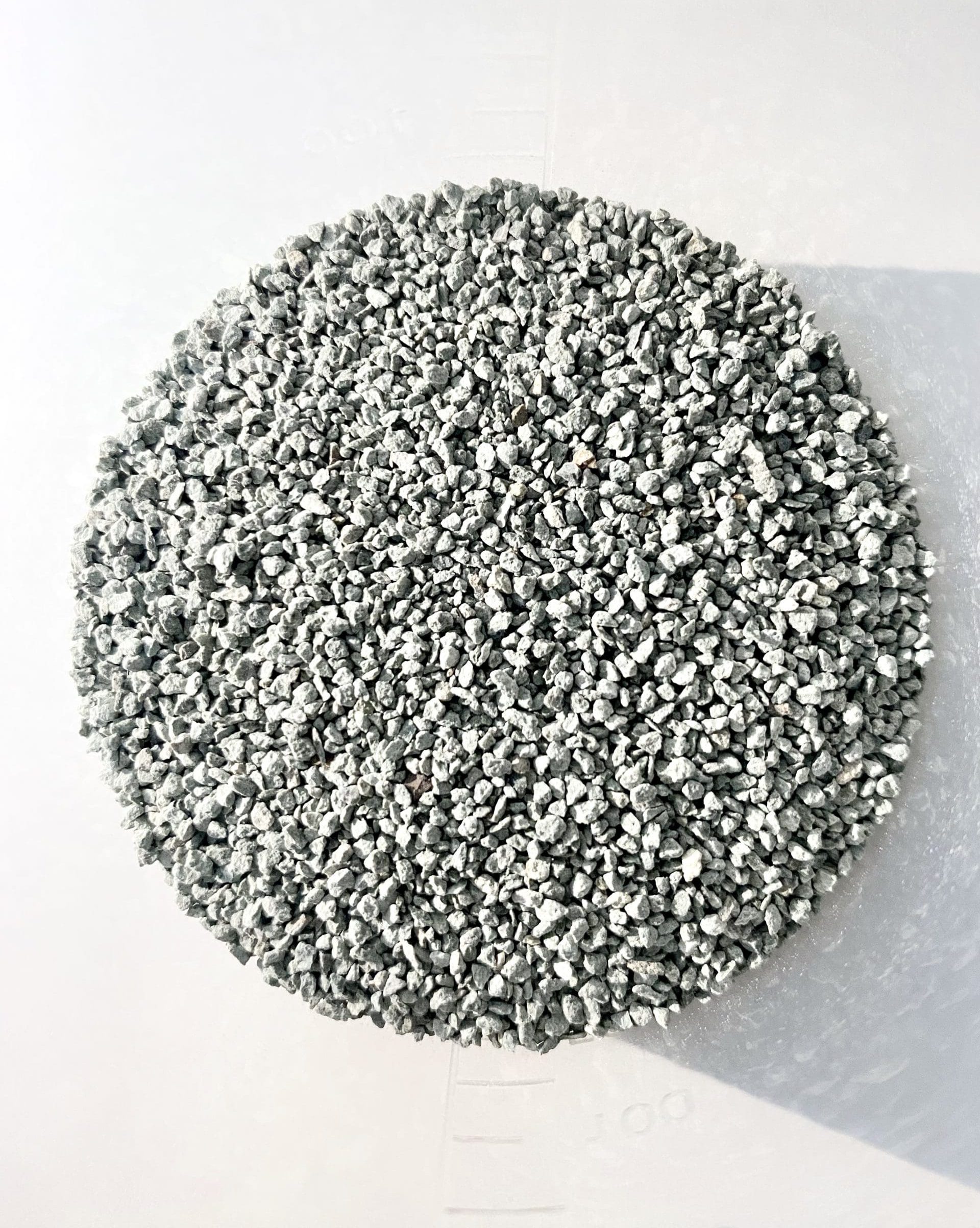
The Turning Point: Replacing Multi-Media with NextSand
Recognizing that traditional filtration media couldn’t handle the particulate load, the utility plant engineer ran a 10-day pilot test with NextSand. Following immediate success during the trial, the plant replaced the failing sand and anthracite with NextSand.
Unlike standard multi-media, NextSand is an advanced alumino-silicate (zeolite) media engineered with an extraordinarily porous surface structure. This unique physical geometry allows it to achieve fine particle filtration down to 3–5 microns—far outperforming traditional multi-media beds that typically catch particles only down to 12–15 microns. Additionally, NextSand’s high micro-porosity yields roughly twice the solids-loading capacity of silica sand, meaning it can trap vastly more particulate before experiencing a pressure drop.
The Results: Long-Term Reliability & < 2 SDI
The retrofitted pressure vessels went online in early 2002. The operational turnaround was immediate:
| Metric | Multi-Media (Sand/Anthracite) | NextSand Retrofit |
| System Capacity | Failed to hit design flux due to ΔP spikes | Consistently maintained net 1,500 gpm capacity |
| Effluent SDI | Failed RO specification (>2.0) | Consistently <2.0 SDI |
| RO Product Output | Stalled | Reliable 1,100–1,200 gpm boiler makeup water |
| Operational Longevity | Unusable baseline | >2 years of continuous, reliable performance |