
The Unexpected Side Effect of Pure Water
In our modern quest for clean, safe drinking-water, we have built incredible technologies. From large-scale municipal desalination plants that turn seawater into drinking-water for arid regions, to point-of-use reverse osmosis (RO) systems underneath our kitchen sinks, we are now able to strip contaminants from water with molecular precision.
But this technological triumph has a hidden downside: We are successfully stripping away the essential minerals our bodies rely on for long-term health.
The Demineralization Problem
When water undergoes advanced filtration—such as desalination, reverse osmosis, or distillation—it emerges as “ultra-pure”. However, this water is chemically incomplete. It is virtually devoid of calcium, magnesium, and bicarbonate.
This creates two distinct issues:
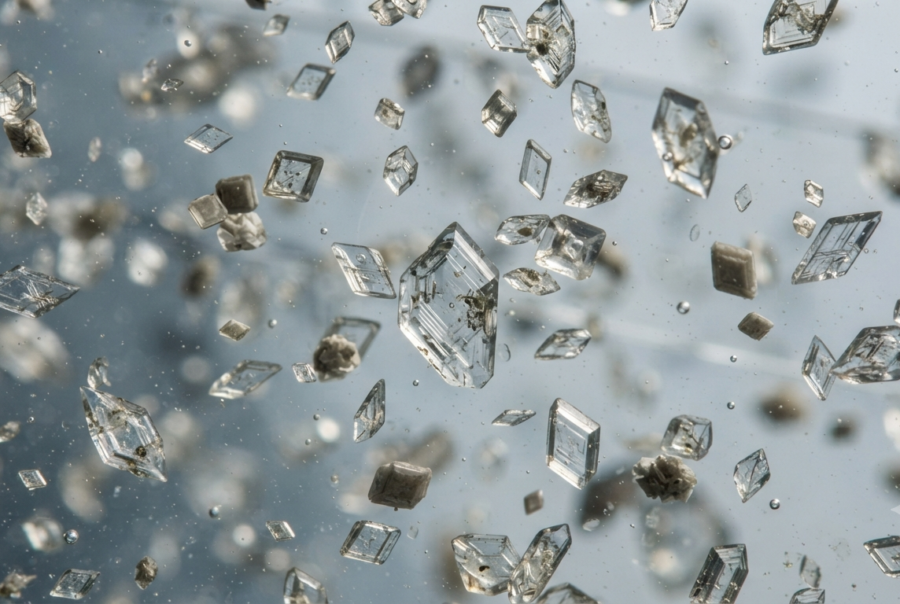
1. Nutritional Depletion
Water is an important supplementary source of calcium and magnesium. While we should meet most of our nutrient needs through our diet, global intake surveys show that significant portions of the population fail to meet their minimum requirements.
This nutritional gap isn’t limited to humans; magnesium deficiency is also a highly prevalent disorder in plants, quietly limiting global crop yields and food quality.
When a household switches to an un-remineralized RO system or a city relies solely on desalinated water, they likely lose an important daily source of these protective minerals.
2. Corrosive and Aggressive Behavior
Water naturally wants to exist in a state of chemical equilibrium (specifically, bicarbonate equilibrium). When water is stripped of all dissolved solids, it becomes aggressive and corrosive.
-
Piping Leaching: Acidic or low-mineral water will actively leach metals (such as lead and copper) out of the pipes and plumbing fixtures it passes through, potentially posing a direct toxic hazard.
-
Domestic Scaling & Decay: Stripping mineral content can actually cause physical degradation of distribution networks and home appliances.
Solving the Mineral Void: Post-Treatment & Stabilization
The answer to the mineral void is not to abandon advanced water treatment. Desalination, RO, distillation, and other high-efficiency technologies serve an important purpose. They can remove contaminants, reduce salinity, and provide safe water where traditional supplies are limited.
The issue is what happens after those technologies do their job.
Modern water treatment should not stop at purification. It should also consider mineral balance.
A complete approach to water quality should ask three questions:
-
Is the water safe?
-
Is the water chemically stable?
-
Does the treatment process unnecessarily remove beneficial minerals?
That third question is often forgotten.
Why Remineralization Alone Is Not the Whole Answer
One common solution is remineralization. After RO or desalination, minerals such as calcium, magnesium, and alkalinity can be added back into the water to improve taste, stability, and nutritional value. The World Health Organization specifically discusses approaches such as adding minerals, blending, or using remineralizing units after treatment.
But remineralization creates a second challenge: once minerals are added back into water, they must be managed properly.
Calcium and magnesium are beneficial minerals, but in the presence of bicarbonate and heat, calcium carbonate can form hard deposits inside pipes, fixtures, heaters, and appliances. So the goal should not be “remove everything” or “add everything back without control.” The better goal is balance:
Keep the minerals that make water complete, but control the way those minerals behave inside the system. This is where ScaleStop TAC becomes especially important.
Why ScaleStop TAC Is a Modern Solution for a Modern Problem
The mineral void is a modern problem created by modern technology. We now have the power to remove almost everything from water, but “empty” water is not always the best endpoint.
The future of water treatment should not be about choosing between contaminated water and mineral-free water. It should be about precision: remove what is harmful, preserve or restore what is beneficial, and control the side effects.
ScaleStop TAC fits that philosophy.
It helps reduce hard scale without salt.
It avoids brine discharge.
It allows calcium and magnesium to remain in the water.
It supports remineralized and naturally mineralized water strategies.
It protects plumbing and equipment without turning water into a sodium-exchanged product.
In independent testing reviewed by the WateReuse Research Foundation, TAC reduced scale formation by over 90%, while ion exchange and capacitive deionization reduced scale by removing scale-forming minerals. The distinction is important: TAC reduces scale by changing mineral behavior, not by stripping minerals out of the water.
Clean Water Should Also Be Complete Water
Advanced filtration has changed the world. Desalination, RO, and distillation allow us to create safe water from difficult sources. But safe water should also be stable, balanced, and thoughtfully designed.
When treatment removes beneficial minerals, we should ask whether those minerals need to be restored. When minerals are present, we should manage them intelligently instead of automatically removing them.
ScaleStop TAC offers a practical bridge between these goals. It supports the idea that water can be clean without being stripped empty, and mineral-rich without being destructive to plumbing and equipment.
The goal is not simply pure water.
The goal is balanced water — water that is safe, stable, mineral-aware, and protected from the problems of hard scale.
Source List
- Chaudhry AH, Nayab S, Hussain SB, Ali M, Pan Z. Current Understandings on Magnesium Deficiency and Future Outlooks for Sustainable Agriculture. Int J Mol Sci. 2021 Feb 12;22(4):1819. doi: 10.3390/ijms22041819. PMID: 33673043; PMCID: PMC7917752.
- World Health Organization. (2009). Calcium and Magnesium in Drinking-water: Public health significance. WHO Press.