Did you know that deploying the same mineral in two different mesh sizes can completely revolutionize two separate stages of your water plant?
| FEATURE | NextSand (14×40 Mesh) | NextFloc (-40 Mesh / 60 Cycle) |
| Unit Operation | Fixed Depth Filter Bed | Coagulation / Flocculation Aid |
| Primary Hydraulic Action | High-velocity packed flow | Dynamic slurry & suspension |
| Treatment Mechanism | Depth straining + Ion exchange | Floc nucleation + Mineral ballast |
| Target Contaminants | Suspended solids, Turbidity, and more! | Heavy metals, COD, Slow Settling Hydroxide Flocs, etc. |
The underlying mineralogy may share a single name, but the hydraulics could not be more radically different!
Clinoptilolite is a high-purity natural zeolite featuring a negatively charged aluminosilicate framework, interconnected sub-micron channels, and exchangeable cations. Those unique atomic properties make it a powerhouse for adsorption and selective ion exchange. Add in angular, highly porous grains, and it becomes an exceptional physical filter. But treating a granular media bed and a fine powder as interchangeable versions of “zeolite” is an operational mistake. Mesh selection is a fundamental process decision!
U.S. standard sieve sizes set 14×40 mesh at roughly down to —the sweet spot for fixed packed beds. Meanwhile, optional 60 cycle at 15-25 microns in size and −40 mesh passes (), providing a fine-powder distribution ideal for traveling with the water stream as an added active solid.
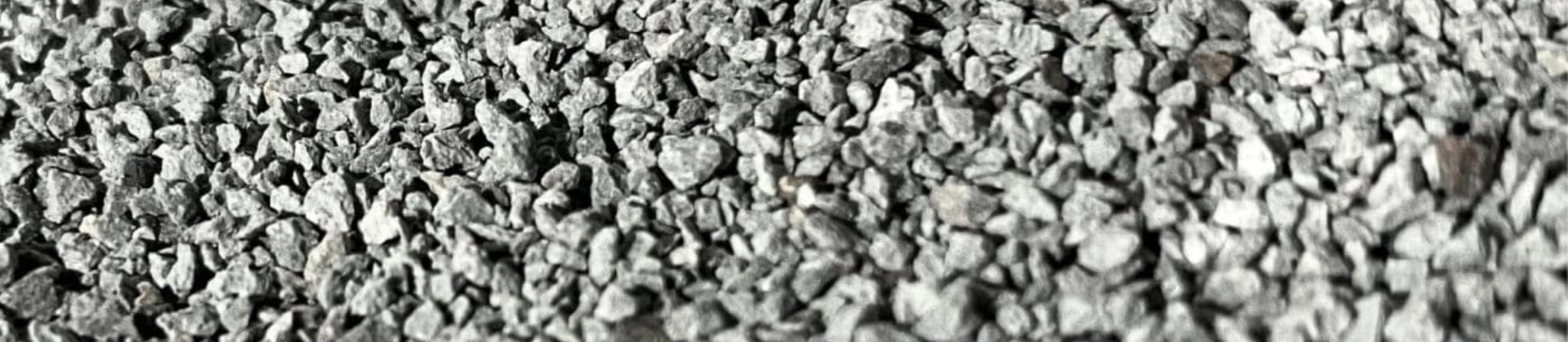
NextSand: Deep-Bed Advanced Filtration Media
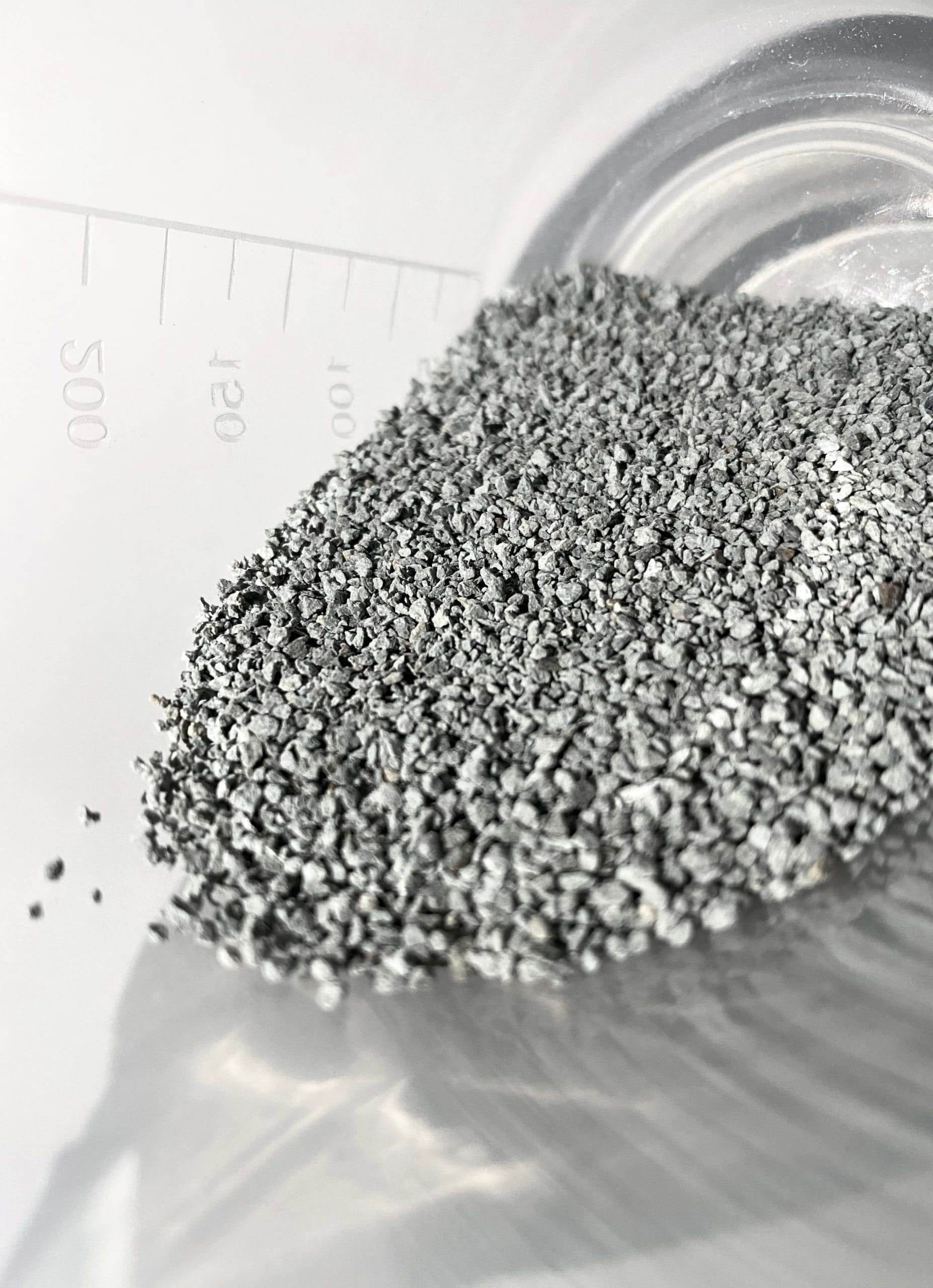
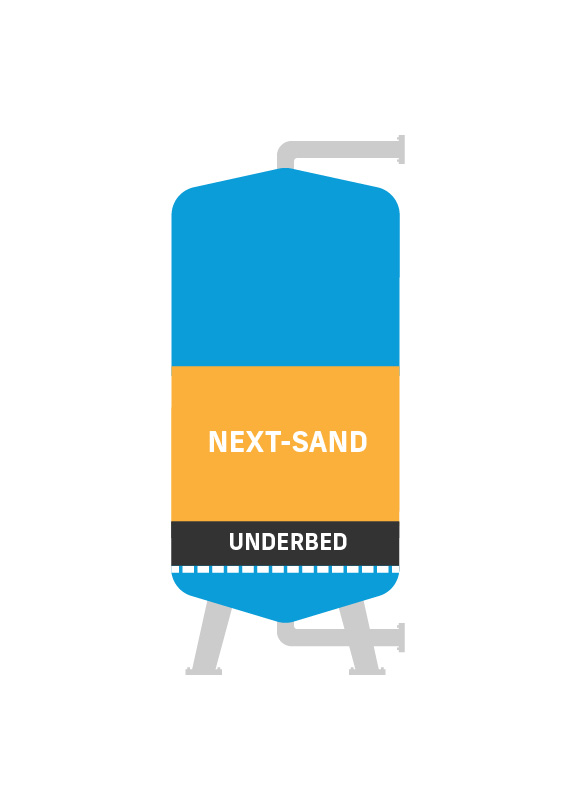
NextSand replaces conventional sand and multi-media beds with a rare, all-natural, highly porous crystalline hydrated aluminosilicate structure. Unlike traditional quartz sand—which acts as a flat, non-porous physical screen—NextSand leverages a three-dimensional framework filled with micro-cavities and channels.
Treatment Advantages & Mechanisms
-
Enhanced Fine Particulate Capture (< 3–5 Microns):
Standard sand filters struggle to capture particles smaller than 15–20 microns without heavy chemical coagulants. NextSand’s combination of high surface area, surface charge, and internal pore structure traps micro-particulates down to 3–5 microns via a combination of mechanical straining, surface physical adsorption, and charge neutralization.
-
Exponentially Higher Dirt Loading Capacity:
Due to its high structural porosity, NextSand offers more than double the solids-loading capacity of conventional sand. This allows the media bed to run significantly longer between backwash cycles, drastically reducing process downtime and wastewater generation.
-
Lower Pressure Drop & Higher Flow Rates:
The uniform particle sizing and optimized pore geometry reduce resistance to fluid flow. NextSand operates efficiently at higher hydraulic loading rates (flux rates) while maintaining lower pressure drop increases across the bed compared to dense silica sand.
-
Heavy Metal & Inorganic Ion Removal via Isomorphous Cation Exchange:
Because substitutes for in the aluminosilicate framework, the media carries a net negative structural charge. This charge is balanced by exchangeable alkali and alkaline earth cations (, , , ).
-
Through equilibrium cation exchange, NextSand can exchange these harmless cations for toxic dissolved heavy metals, exhibiting a high affinity for divalent cations.
-
Ready to optimize your treatment process from clarification to final filtration?
NextFloc: The Multi-Action Solution for Advanced Coagulation & Clarification
While NextSand revolutionizes deep-bed physical filtration by capitalizing on ultra-high surface area and high loading rates, downstream water clarification often demands a powerful chemical and physical boost before filtration even occurs.
That’s where NextFloc comes in. Formulated to complement high-performance filtration media, NextFloc is a natural, multi-action technology engineered to accelerate solids settling, eliminate treatment bottlenecks, and dramatically enhance overall water quality.
Simultaneous Mechanisms of Action
Where traditional chemical programs rely on single-pathway reactions, NextFloc unleashes six distinct chemical and physical mechanisms simultaneously to optimize raw water pre-treatment:
-
Ionic (Ion) Exchange: Actively swaps target ions to accelerate contaminant binding and destabilization.
-
Surface Chemisorption: Leverages a massive average surface area () to absorb organic and inorganic compounds.
-
Electrostatic-Charge Layering: Rapidly neutralizes charges on suspended colloids, breaking fluid stability.
-
Chemical Binding: Establishes strong chemical bonds to isolate specific target contaminants.
-
Co-Precipitation of Inorganics: Facilitates the joint precipitation of stubborn metals and minerals alongside Calcium or Iron species.
-
Coagulation & Agglomeration Support: Supercharges primary coagulants and polymers to build heavy, well-defined flocs.
Operational & Performance Advantages
By integrating these mechanisms into a single stage, NextFloc delivers significant operational wins across the entire treatment train:
Superior Water Quality & Contaminant Control
-
Replaces Complex Chemical Dosing: Reduces or replaces heavy lime softening, alum, and primary polymer additions with an all-natural mineral.
-
TOC & Trace Metal Removal: Can target Total Organic Carbon (TOC) while knocking down trace metals.
-
Turbidity Management: Effortlessly buffers against sudden raw water turbidity spikes.
-
Eliminates Pin Floc: Prevents micro-floc formation that traditionally blinds and clogs downstream media beds.
Rapid Reaction Kinetics
-
Lightning-Fast Action: Surface sorption and charge layering reactions are complete in under 5 minutes.
-
Temperature Resilience: Performs consistently across a broad temperature range of 15°C to 50°C, preventing cold-weather performance drops.
-
Low Dosage Footprint: Requires light dosing (typically 0.5–3 lb per 1,000 gallons) with a maximum mix time of just 10 minutes.
Clarifier & Sludge Optimization
-
Dense Granular Settling: Forms heavy flocs with superior gravity sedimentation, increasing clarifier throughput.
-
Lower Operational Spend: Drastically lowers secondary polymer consumption and enhances sludge dewatering efficiency, driving down solid waste disposal costs.
Match the Mesh to the Operational Objective.
-
Deploy NextSand (14×40) when high flow hydraulics, low pressure drop, and deep-bed solids retention are your primary focus.
-
Specify NextFloc (−40 / 60 cycle mill) when your process demands maximum active surface area, rapid floc nucleation, mineral ballasting, or high-capacity chemical adsorption.
By integrating these targeted media strategies into your treatment train, you optimize performance at every stage—delivering higher effluent clarity, greater operational efficiency, and lower overall cost.