
Ammonium removal is an important consideration in municipal wastewater treatment, industrial effluent management, and certain drinking water applications.
Most municipal treatment facilities rely primarily on biological nitrification to convert ammonium into nitrite and subsequently nitrate. While biological treatment is effective under appropriate operating conditions, performance can be affected by temperature, oxygen availability, process loading, and the health of nitrifying microorganisms.
Natural clinoptilolite offers a different mechanism for ammonium capture: cation exchange.
A substantial body of published research has examined this property, including studies of natural and modified clinoptilolite used in both batch and continuous-flow treatment systems.
The findings identify opportunities to evaluate finely milled clinoptilolite, including Next Filtration’s NextFloc, as a supplemental treatment material.
Why Clinoptilolite Attracts Ammonium
Clinoptilolite belongs to the zeolite family of minerals. Its crystalline framework contains negatively charged sites balanced by exchangeable cations, including sodium, potassium, and calcium. When clinoptilolite contacts water containing ammonium ions (NH₄⁺), some of these exchangeable cations can be displaced by ammonium. The resulting process allows ammonium to be retained within or on the mineral structure.
This is fundamentally different from biological nitrification. The ammonium is not necessarily converted into another nitrogen species. Instead, it is transferred from the water to the mineral. As a result, ammonium-loaded clinoptilolite must eventually be regenerated, recovered, or managed as part of the treatment system.
What Published Research Demonstrates
In their 2010 review, Natural Zeolites as Effective Adsorbents in Water and Wastewater Treatment, Shaobin Wang and Yuelian Peng compiled research describing ammonium adsorption capacities across a wide variety of natural zeolite materials. Their review reported ammonium adsorption capacities ranging from approximately 2.7 to 30.6 mg/g across the materials and treatment conditions surveyed.
Importantly, these values did not represent a single material or a standardized test. They included different zeolite sources, mineral pretreatments, water chemistries, and experimental conditions.
Several findings are especially relevant to wastewater operators.

Selected values reported by Wang and Peng (2010), Table 3, p. 14. Values are not NextFloc specifications.
The variations are noteworthy. Although the minerals were all described as clinoptilolite, their measured capacities were not identical.
Mineralogical composition, exchangeable cations, particle size, pretreatment, and solution chemistry all influenced adsorption.
This is an important consideration when selecting a clinoptilolite product for water treatment. The generic designation zeolite or even clinoptilolite does not establish a particular ammonium adsorption capacity.

Pilot-Scale Evidence for Ammonium Reduction
The findings from Valentukeviciene and Rimeika provide a complementary perspective. Their pilot-scale groundwater treatment study investigated powdered clinoptilolite used in conjunction with aluminum sulfate coagulation. The researchers reported an ammonium concentration of 1.07 mg/L in the untreated groundwater. Following conventional coagulation, the measured ammonium concentration was 1.01 mg/L.
When powdered clinoptilolite was added at 5 g/L, the ammonium concentration decreased to 0.05 mg/L after sedimentation.

Lower is better. Values from the pilot-scale study, Table 2.
The combined treatment process achieved approximately 95% ammonium reduction relative to the untreated groundwater.
These results are particularly interesting because the conventional coagulation step alone had produced relatively little ammonium reduction in the specific experimental comparison.
The introduction of powdered clinoptilolite corresponded with a substantial improvement. However, the study does not establish what proportion of the ammonium reduction occurred exclusively through ion exchange versus other contributions from the overall treatment conditions.
Why Particle Size Matters
The Wang and Peng review discusses multiple studies demonstrating that the particle size of clinoptilolite can influence ammonium uptake.
In one investigation described by the authors, smaller zeolite particles exhibited increased ion-exchange performance.
Another study found that ammonium adsorption capacity increased as clinoptilolite grain size decreased. These observations are consistent with the importance of mass-transfer limitations in mineral adsorption. Reducing particle size can decrease the distance contaminants must travel to reach accessible exchange sites and increase the external surface area available for contact. However, smaller particles do not create additional exchange capacity indefinitely. Equilibrium capacity remains dependent on the mineral’s characteristics, accessible sites, and the chemistry of the water.
Potential Applications for NextFloc
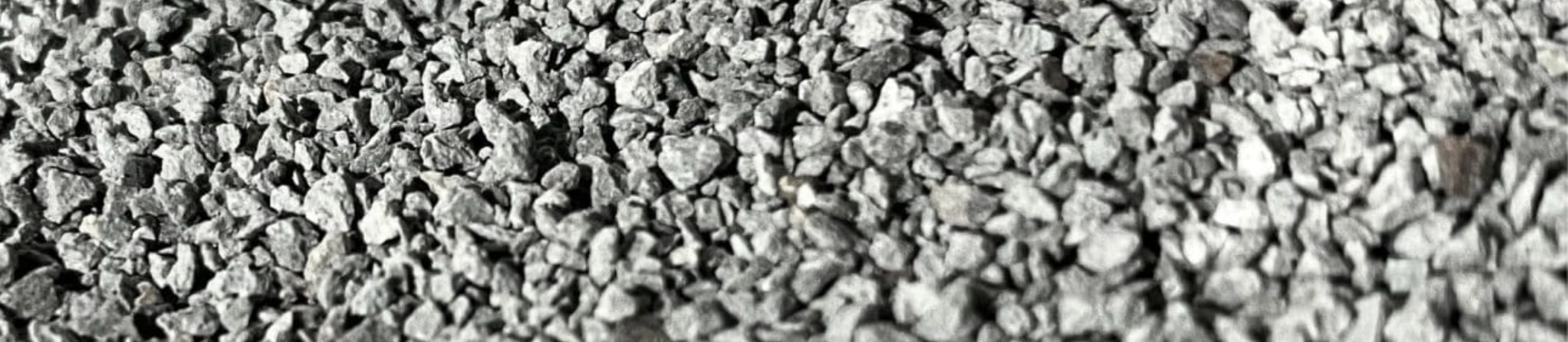
NextFloc is available in two physical grades that could be evaluated for different treatment objectives.
NextFloc −40 mesh may be suitable for investigations involving batch contact, clarification, and other processes where powdered mineral can be reliably distributed and subsequently removed.
NextFloc 60-cycle milled may be a candidate for applications where finer particle size could improve contact kinetics during limited residence times.
Both grades should be evaluated under representative process conditions. Finer grinding does not necessarily guarantee greater equilibrium ammonium capacity.
Potential applications for evaluation include municipal wastewater sidestreams, industrial wastewater with elevated ammonium, selected groundwater treatment applications, and supplemental treatment where biological nitrification performance is constrained.
For biological wastewater plants, using clinoptilolite as a consumable or recyclable ammonium-capture medium would require a separate assessment of mineral dosing, solids recovery, and the economics of removing the captured nitrogen.
What Operators Should Measure
Ammonium adsorption performance cannot be predicted reliably from influent ammonium concentration alone. Calcium, magnesium, potassium, sodium, organic compounds, pH, contact time, and background ionic strength can affect the results.
A useful evaluation should therefore include both ammonium reduction and the practical consequences of introducing a powdered mineral into the process. For wastewater applications, these include the effect on sludge production, solids separation, settling performance, and downstream solids-handling equipment.
It is also important to distinguish NH₄⁺ results from ammonia-nitrogen results reported as NH₄-N or NH₃-N. They are different reporting bases and should not be compared without conversion.
A Research-Supported Opportunity for Process Improvement
The scientific literature establishes clinoptilolite as a mineral capable of capturing ammonium through ion exchange.
Pilot-scale research further demonstrates that powdered clinoptilolite can contribute to substantial ammonium reductions when integrated with conventional treatment processes.
NextFloc offers operators and treatment engineers an opportunity to investigate these properties using a finely processed mineral supplied by Next Filtration Technologies.
Its suitability for a particular application, including the preferred particle size and dosage, should be confirmed through representative water testing rather than inferred directly from published adsorption capacities.
Sources & References
- Wang, S., & Peng, Y. (2010). Natural zeolites as effective adsorbents in water and wastewater treatment. Chemical Engineering Journal, 156(1), 11–24. DOI: 10.1016/j.cej.2009.10.029.
- Valentukeviciene, M., & Rimeika, M. (2007). Development of a Fluidized Batch Process Using Natural Powdered Zeolite (Clinoptilolite). Polish Journal of Environmental Studies, 16(2), 283–288.