
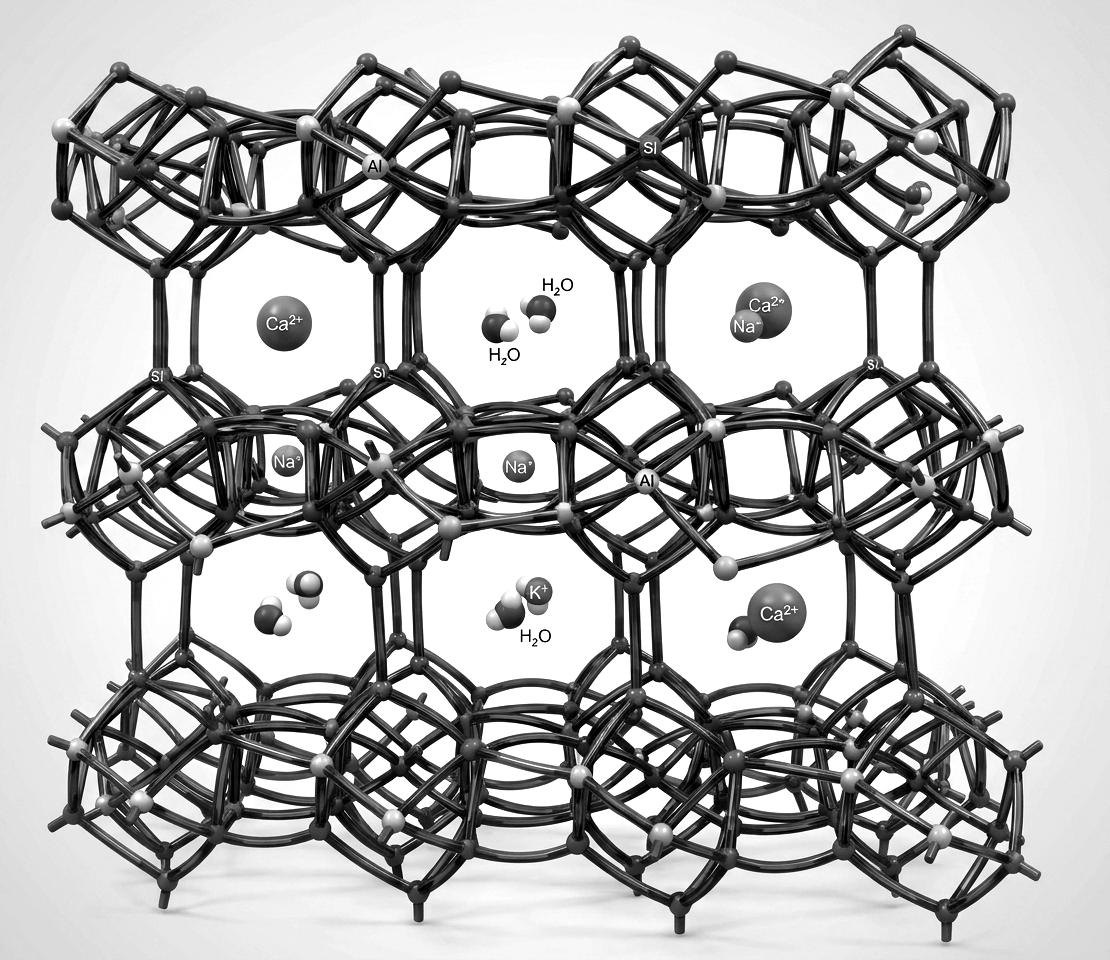
When designing or upgrading a granular filtration system, engineers routinely analyze particle mesh sizes, surface loading rates (), and backwash expansion. However, one critical property is often completely overlooked: the mineral purity and crystallographic structure of the media itself.
Not All Zeolites Are Created Equal
Clinoptilolite is a naturally occurring hydrated silicate mineral. Across the Western United States, open-pit mines produce clinoptilolite for various industrial, soil-amendment, and agricultural uses. However, out of all these active deposits, only a select few produce material suitable for water filtration, and only one mine produces the ultra-high purity clinoptilolite used for NextSand.
The Chemistry of Bed Attrition: Good vs. Bad Impurities
Granular filter media in pressure vessels or gravity beds undergo intense physical stress during service runs and air-assisted backwashing. If the media contains weak or water-soluble mineral impurities, the shear forces during backwashing cause granule attrition (breakdown).
The technical report by Johnson & Desborough highlights how common mineral contaminants affect media durability:
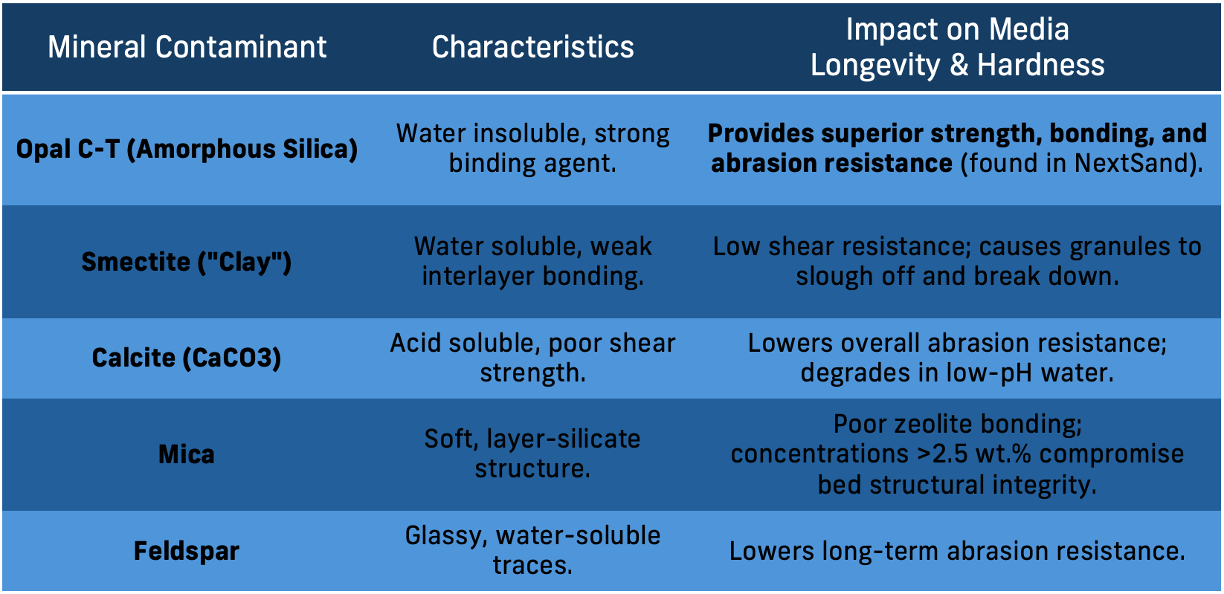
High-purity NextSand is uniquely bound by naturally occurring Opal C-T. This natural cementing agent gives NextSand granules superior mechanical strength, making them resistant to chemical attack across a pH range of >1 to <12 and thermally stable up to 500°C.
The Field Proof: Minimal Bed Loss
While low-purity clinoptilolite products frequently suffer from bed loss due to clay and calcite disintegration, high-purity NextSand has demonstrated very little bed breakdown across years of continuous operation in high-flow pressure vessels and gravity municipal filters. When specifying natural media, ensuring high mineral purity ( clinoptilolite) with undetectable smectite/clay isn’t just a technical specification—it is the difference between a media bed with significant longevity and a costly operational headache.
For more details on Next-Sand and how it can improve your current filtration treatments, please visit our literature page or click the link to the full technical report.